Universities in the Netherlands Best Affordable Universities in the NetherlandsStudying in the Netherlands is becoming increasingly popular among international students due to its high-quality education, English-taught programs, and globally recognized universities. However, studying abroad can be expensive. If you’re looking for affordable universities in the Netherlands without compromising on education quality, this FAQ guide is for you.
1. Why should I study in the Netherlands as an international student?
Answer:
The Netherlands is one of the most student-friendly countries in Europe. Here’s why it’s an excellent choice:
- Over 2,000 English-taught programs.
- High global ranking of universities.
- Affordable compared to other European countries like the UK and Switzerland.
- Welcoming to international students from all backgrounds.
- Central European location makes travel easy and cheap.
2. What is the average cost of studying in the Netherlands for international students?
Answer:
For non-EU/EEA international students, the annual tuition fees generally range between:
- €6,000 to €15,000 for bachelor’s programs.
- €8,000 to €20,000 for master’s programs.
However, some universities offer low-tuition programs or scholarships that significantly reduce costs.
3. What are the most affordable universities in the Netherlands for international students?
Answer:
Below are some of the most budget-friendly universities with excellent education quality:
a. University of Twente
- Location: Enschede
- Tuition Fees: Starting from €9,000/year
- Why It’s Affordable: Offers a range of scholarships like UTS (University of Twente Scholarship).
- Highlights: Strong in engineering, business, and IT.
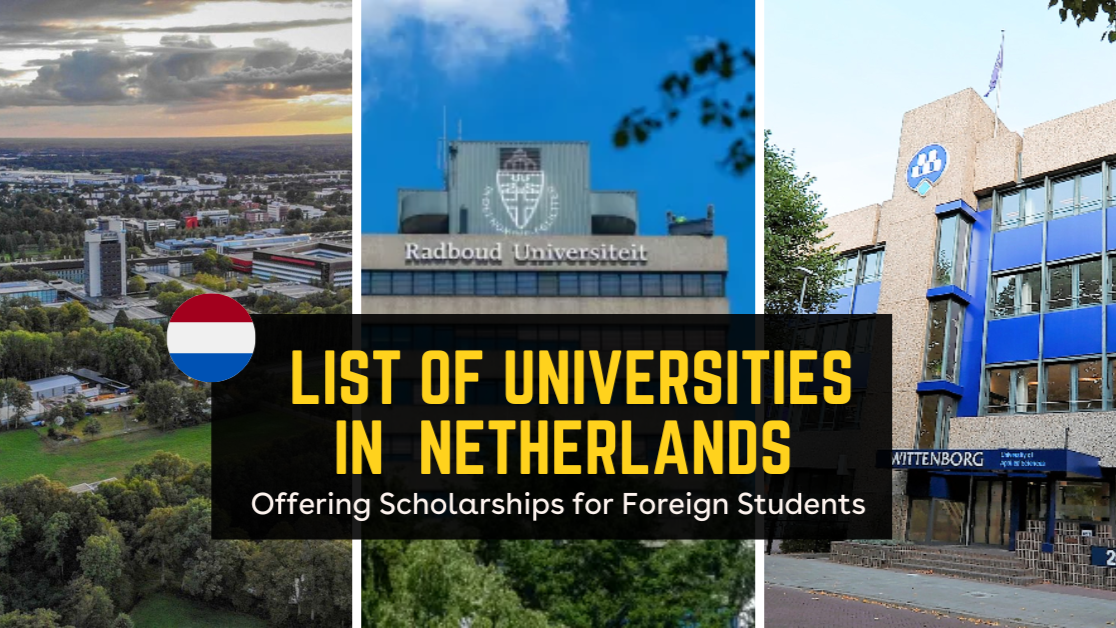
b. Radboud University
- Location: Nijmegen
- Tuition Fees: Approx. €8,500 to €11,500/year
- Why It’s Affordable: Scholarships available for non-EU students (e.g., Radboud Scholarship Programme).
- Highlights: Excellent in humanities and sciences.
c. HAN University of Applied Sciences
- Location: Arnhem & Nijmegen
- Tuition Fees: Around €7,000 to €8,000/year
- Why It’s Affordable: Lower tuition and affordable living costs.
- Highlights: Focuses on practical skills and industry partnerships.
d. NHL Stenden University of Applied Sciences

- Location: Leeuwarden
- Tuition Fees: ~€7,500/year
- Why It’s Affordable: Lower cost of living in the north of the Netherlands.
- Highlights: Hospitality, media, and tourism studies.
e. Windesheim University of Applied Sciences
- Location: Zwolle
- Tuition Fees: €7,300 – €8,000/year
- Why It’s Affordable: Offers budget-friendly bachelor’s degrees in business and technology.
- Highlights: Close student-professor interaction and practical education.
4. What is the difference between Research Universities and Universities of Applied Sciences in the Netherlands?
Answer:
- Research Universities: Focus on theoretical and academic knowledge (e.g., University of Amsterdam, Leiden University).
- Universities of Applied Sciences: Focus on practical skills and professional training (e.g., HAN, NHL Stenden).
Applied sciences universities tend to be more affordable and career-oriented.
5. Are there scholarships available for international students in the Netherlands?
Answer:
Yes! The Netherlands offers many scholarships, including:
- Holland Scholarship: €5,000 one-time award for non-EU students.
- Orange Tulip Scholarship (OTS): Country-specific scholarships.
- Erasmus Mundus Scholarships: Fully-funded master’s programs.
- University-specific scholarships: Many universities have their own funding schemes.
6. What is the cost of living for a student in the Netherlands?
Answer:
On average, international students spend between €800 to €1,200 per month, which covers:
- Rent: €300–€600/month (depending on city)
- Food: €150–€250/month
- Insurance: €100/month
- Transport, clothing, and leisure: €100–€200/month
Smaller cities like Zwolle, Leeuwarden, or Enschede offer a lower cost of living.
7. Can international students work while studying in the Netherlands?
Answer:
Yes, but there are limitations:
- Non-EU/EEA students need a work permit (TWV).
- Can work up to 16 hours/week during the academic year or full-time in summer.
- Many universities have on-campus job boards or internships.
Working part-time helps manage living expenses, especially in affordable cities.
8. Are there English-taught bachelor’s and master’s degrees at affordable universities?
Answer:
Yes, Dutch universities offer a wide range of fully English-taught programs in affordable institutions like:
- University of Twente – Engineering, Social Sciences
- HAN University – Automotive Engineering, Life Sciences
- NHL Stenden – Media, Hospitality, Logistics
You can find these programs on the Study in Holland portal.
9. How do I apply to affordable universities in the Netherlands?
Answer:
Follow these general steps:
- Choose your program on www.studyinholland.nl.
- Check admission requirements (e.g., previous academic performance, language test).
- Prepare documents: Diploma, transcripts, English test (IELTS/TOEFL), CV, motivation letter.
- Apply via Studielink: This is the official Dutch university application portal.
- Track your status and wait for an offer letter.
Most applications open in October and close around May-June for September intake.
10. What English language tests are accepted for Dutch universities?
Answer:
Most universities accept:
- IELTS – Minimum overall band: 6.0–6.5
- TOEFL iBT – Minimum score: 80–90
- Cambridge Certificate in Advanced English (CAE)
Some applied sciences universities may accept medium of instruction certificates as an alternative.
11. Are degrees from affordable Dutch universities recognized globally?
Answer:
Absolutely. The Netherlands is part of the Bologna Process, which means its degrees are recognized across Europe and beyond. Employers value Dutch education for its practical and innovative approach.
12. What is the visa process for international students in the Netherlands?
Answer:
- Once accepted, the university applies for your residence permit (MVV visa).
- You’ll receive instructions for visa application and fee payment (around €210).
- Submit documents to the Dutch embassy or consulate in your country.
- Visa is usually processed within 2–4 weeks.
Students also need to register at the local municipality (GBA) and get health insurance.
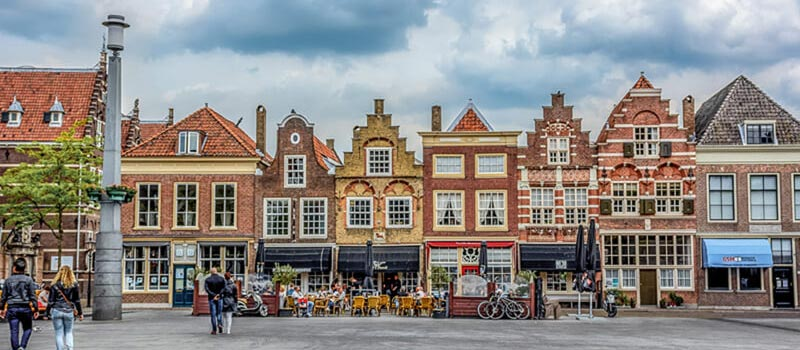
13. What are the most affordable cities to live in as a student in the Netherlands?
Answer:
Some of the cheapest and student-friendly cities include:
- Enschede – Home to University of Twente
- Leeuwarden – NHL Stenden
- Zwolle – Windesheim
- Arnhem/Nijmegen – HAN University
These cities offer lower housing and food costs than major cities like Amsterdam or Rotterdam.
14. Do universities in the Netherlands provide accommodation?
Answer:
Most universities do not guarantee on-campus accommodation, but they assist international students in finding housing. Costs range from €300 to €600 per month.
Tip: Apply early through university housing partners or websites like Kamernet, HousingAnywhere, or SSH
15. How do Dutch universities support international students?
Answer:
Affordable Dutch universities often provide:
- Orientation weeks for new students.
- Student support offices for housing, work, and insurance help.
- Buddy programs to ease transition.
- Career counseling and job fairs.
Final Thoughts
Studying in the Netherlands doesn’t have to break the bank. With careful research and early applications, you can enroll in world-class yet affordable universities that provide excellent education, international exposure, and exciting career opportunities.
If you’re budget-conscious, focus on:
- Applied Sciences universities for practical programs.
- Scholarship opportunities at each institution.
- Living in smaller cities to cut costs.
Ready to start your journey? Explore Dutch universities now, apply early, and take the first step toward an affordable and valuable international education!