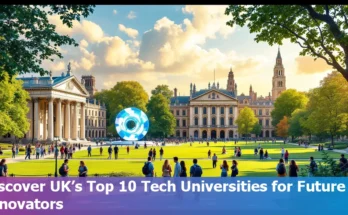
Higher Education When it comes to higher education, the United Kingdom consistently ranks among the top global destinations for students seeking world-class academic experiences. Home to some of the oldest and most prestigious institutions, the UK blends historic excellence with modern innovation, making it a top choice for both domestic and international students.
This article explores the key reasons why UK universities are considered some of the best in the world—from academic reputation and research strength to international diversity and post-graduation opportunities.
🎓 1. A Legacy of Academic Excellence
UK universities such as the University of Oxford and the University of Cambridge have been at the forefront of education for centuries. These institutions have produced Nobel laureates, world leaders, scientists, and writers who have shaped history.
- Established reputation: UK universities dominate global rankings consistently.
- Academic rigor: The curriculum encourages critical thinking, creativity, and independent research.
- Rich traditions: Many institutions uphold a legacy that dates back over 800 years, contributing to their prestige and global appeal.
🌍 2. Global Recognition and Rankings
UK universities perform exceptionally well in global rankings such as:
- QS World University Rankings
- Times Higher Education (THE) World Rankings
- Academic Ranking of World Universities (ARWU)
In the 2025 rankings:
- Oxford is ranked #2 globally
- Cambridge is in the top 5
- Imperial College London and UCL (University College London) are consistently in the global top 10–20
This global visibility gives UK graduates a competitive edge in the job market around the world.
🧪 3. Research and Innovation Powerhouses
The UK is known for groundbreaking research across all fields—from medical sciences to artificial intelligence. Universities receive funding from bodies like UK Research and Innovation (UKRI) to drive innovation and discovery.
- The Research Excellence Framework (REF) assesses and ranks UK institutions based on research output.
- UK universities contributed to the discovery of DNA, penicillin, and the World Wide Web.
- The focus on interdisciplinary research and innovation keeps them at the cutting edge of global challenges.
🌐 4. International Student-Friendly Environment
The UK is the second most popular destination for international students globally, with over 600,000 international students currently enrolled.
- Multicultural campuses offer global exposure and inclusive learning.
- Universities provide dedicated support services, visa assistance, language classes, and social integration programs.
- The Graduate Route visa allows international students to stay and work for up to 2 years (or 3 for PhDs) after completing their studies.
📚 5. Diverse Range of Programs and Flexibility
UK universities offer a wide selection of degree programs—from traditional fields to modern interdisciplinary options.
- Undergraduate degrees are usually 3 years (4 in Scotland).
- Master’s programs often take only 1 year, making them time-efficient and cost-effective.
- Sandwich courses, foundation years, and part-time or online options are available to suit different learning needs.
You can tailor your degree with electives, research projects, internships, and industry placements.
💼 6. Strong Industry Links and Employability
UK universities maintain close partnerships with top global companies, making students work-ready and highly employable.
- Institutions like the University of Manchester, LSE, and Warwick are known for career-focused education.
- Many universities offer placement years, internships, and live projects.
- Top employers frequently recruit from UK campuses in fields like finance, tech, healthcare, and consulting.
Graduates are known for their critical thinking, communication, and leadership skills, honed by UK’s unique academic approach.
🏛️ 7. Historic Yet Modern Campus Experience
The UK’s blend of history and modernity creates a unique educational environment:
- Study in castles, Gothic halls, and modern research labs.
- Cities like London, Edinburgh, and Manchester offer vibrant student life, cultural diversity, and endless entertainment.
- University libraries, museums, sports facilities, and green campuses create a holistic experience.
💷 8. Financial Support and Scholarships
Though tuition fees may appear high, the UK offers numerous scholarships, bursaries, and funding options.
- Chevening Scholarships, Commonwealth Scholarships, and university-specific awards are available.
- Scholarships are merit-based, need-based, or tailored for specific nationalities.
- Shorter course durations also reduce living and tuition costs compared to other countries like the US or Australia.
📅 9. Streamlined Application and Visa Process
The UCAS system makes applying to UK universities straightforward, and recent visa policies have been student-friendly:
- Apply to up to 5 universities in one application via UCAS.
- Student visas are generally processed within 3 weeks.
- The Graduate Route ensures post-study opportunities.
🧭 10. Gateway to Europe and Beyond
The UK’s location gives students a chance to explore the world:
- Easy access to Europe for travel, internships, and conferences.
- Many UK universities have exchange programs and global campuses.
- Multinational alumni networks and global recognition of UK degrees open doors worldwide.
✅ Conclusion
UK universities stand out as global leaders in higher education because of their history, innovation, and commitment to excellence. Whether you’re drawn by academic rigor, international exposure, or a pathway to a global career, studying in the UK equips you with the knowledge, skills, and confidence to thrive in a competitive world.
So, if you’re planning your higher education journey, there’s no doubt—the UK should be at the top of your list.
❓FAQs
Q1: What is the top university in the UK?
The University of Oxford consistently ranks as the #1 university in the UK and often globally.
Q2: Is it expensive to study in the UK?
Tuition and living costs can be high, especially in London, but there are many scholarships and shorter degree programs that make UK study cost-effective.
Q3: Are UK degrees accepted worldwide?
Yes. UK qualifications are internationally recognized and respected by employers and academic institutions.
Q4: What are the popular fields of study in the UK?
Business, engineering, law, medicine, and social sciences are among the most sought-after fields.
Q5: How can I apply to UK universities?
Use UCAS for most undergraduate programs. For postgraduate degrees, apply directly through university websites.